
Dental work abroad: what happens if something goes wrong after you fly home?
The question every patient asks — and almost no clinic answers
Search for dental treatment abroad in German, Dutch, Norwegian, Swedish or Russian, and the same question appears in every language, in patients’ own words: what happens if a problem shows up after I am back home? It is the single most common objection to travelling for treatment — and it is mostly answered by press coverage and forum horror stories, because clinics prefer to talk about something else.
We think the question deserves a direct answer, because it is the right question. Anyone can look after you while you are in the building. The measure of a clinic is what happens when you are 3,000 kilometres away.
First, the honest baseline: complications exist everywhere
No dentist anywhere can promise you zero complications — not in Antalya, not in London, not in Berlin. Restorations can chip, gums can become inflamed, an implant can fail to integrate. These things happen at documented rates in every country, in every price bracket. A clinic that promises otherwise is telling you something about its marketing, not its dentistry.
What differs between clinics is not whether problems can occur. It is whether the clinic has a plan for when they do — and whether that plan is written down before you pay.
What an honest aftercare answer contains
Strip away the badges and the promises, and a real aftercare arrangement has parts you can verify:
- A named person who answers. Not an info@ address — the dentist who treated you, reachable through a channel you used before you ever flew out. If the clinic could answer your questions on WhatsApp while selling to you, it can answer them afterwards.
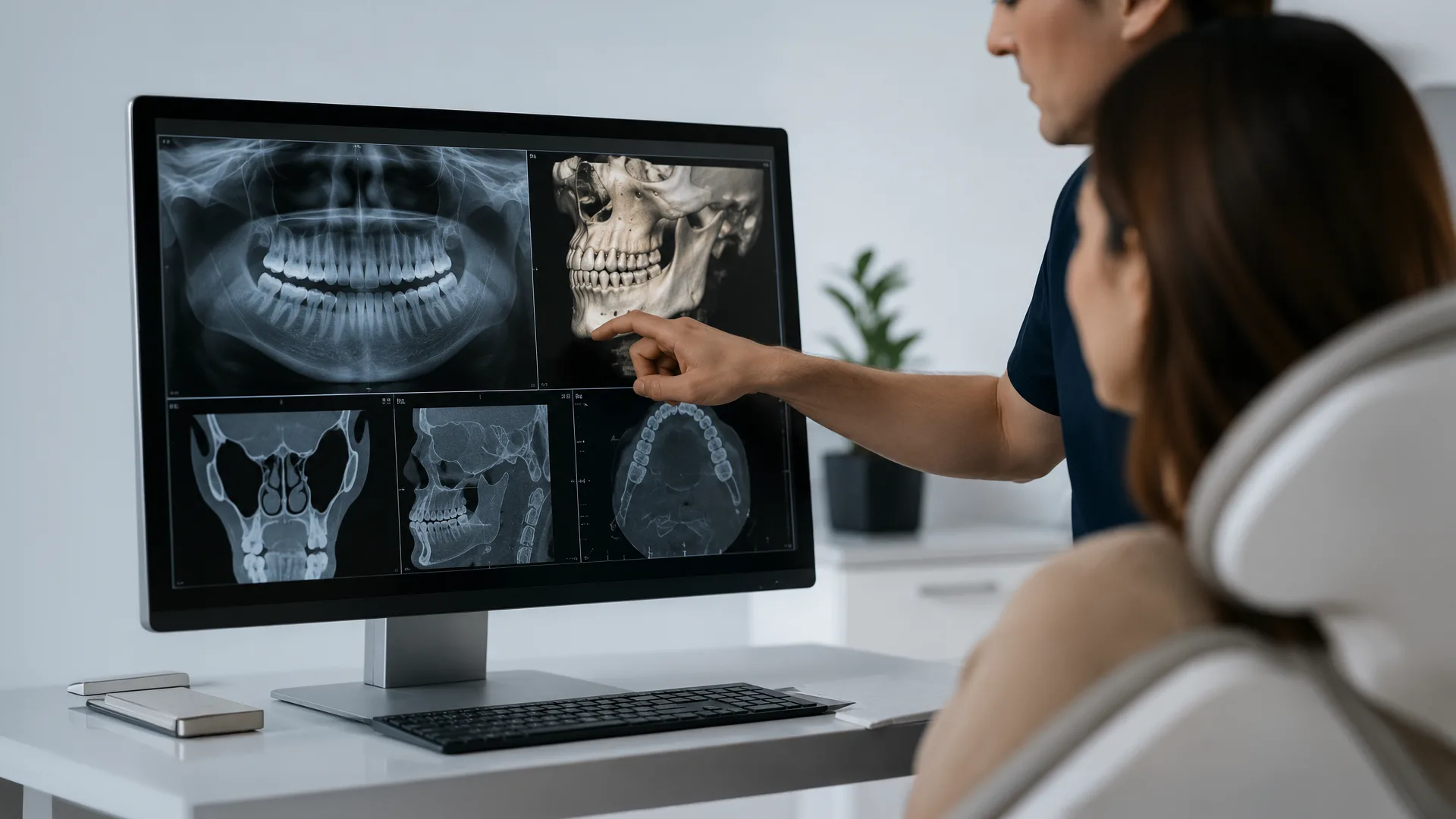
- A written record you take home. What was done, tooth by tooth, with the materials and brands used, and imaging from before and after. Any dentist at home can work with a documented mouth; nobody can work with a mystery.
- A defined process for assessing a problem remotely. Photographs and a video call sort most concerns into two honest categories: what a local dentist should handle now, and what is worth a return visit.
- Warranty terms with the exclusions printed. A warranty that lists what it does not cover is a document; one that does not is an advertisement. Ask to read the exclusions before treatment, not after.
- Clarity about who pays for what. If a revision is needed and it is the clinic’s responsibility, does the clinic say so in writing? Vagueness here is itself an answer.
The pattern in the horror stories
When the BBC sent a dentist mystery-shopping in 2022, posing as a patient with a healthy mouth, the detail most coverage skipped is the one worth knowing: of the 120 Turkish clinics that responded, 50 declined to treat a healthy mouth at all. The failures that make headlines cluster in a specific kind of operation — high volume, anonymous clinicians, sales pressure, and no answer to the aftercare question. That is not a description of a country. It is a description of a clinic type, and it is avoidable by selection.
The UK General Dental Council publishes a checklist of questions for anyone considering treatment abroad — who will treat you, what are their qualifications, what happens if something goes wrong, who provides follow-up. We think the strongest thing any clinic can do is answer that checklist question by question, in writing, before being asked.
Questions that expose a clinic with no answer
- Who exactly do I contact if I have a problem in six months — a name, not a department?
- Will I take home written documentation of everything done, including imaging?
- May I read the warranty exclusions before I agree to treatment?
- If a revision is needed, what is covered, and what is in writing?
- Has the clinic ever told a patient a problem should be handled by a dentist at home — and paid attention to how that went?
Ask these five questions of any clinic, including ours. The clinics that welcome them and the clinics that change the subject are giving you the same information, in opposite directions.
About this treatment: Dental implants →
Send us a scan. We will tell you what you actually need.
Including, quite often, that it is less than you were told somewhere else.